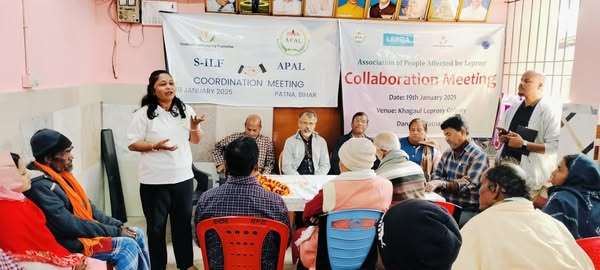
The collaboration meeting between the Association of People Affected by Leprosy (APAL), the Sasakawa India Leprosy Foundation (S-ILF), and LEPRA was convened on 19 January 2025 at the Khagual Leprosy Colony in Patna, Bihar. This significant event gathered key stakeholders and leaders from the leprosy community to discuss initiatives aimed at improving the lives of individuals and families affected by leprosy. The meeting served as a platform to strengthen partnerships and explore collaborative strategies regarding advocacy, healthcare, and social support.
Representatives from APAL’s State Committee and leaders from leprosy colonies across the region actively engaged in the discussions. Mrs. Maya Ranavare, President of APAL, emphasized the importance of empowering individuals affected by leprosy and fostering community resilience. Mr. Ramavarai Sah, Joint Secretary of APAL, provided insights into ongoing efforts and future plans designed to enhance the quality of life for affected individuals. Representing S-ILF, Mr. Gaurav Sen, CEO of the foundation, highlighted the critical role of sustainable livelihood programs and educational initiatives for communities impacted by leprosy. Mr. Rajnikanth Singh, State Coordinator of LEPRA, reaffirmed LEPRA’s commitment to delivering comprehensive healthcare and support services to those in need.
The meeting highlighted the collective commitment of APAL, S-ILF, and LEPRA to collaborate towards achieving a leprosy-free and inclusive society. Discussions centred on addressing the challenges faced by leprosy-affected individuals, advocating for their rights, and creating opportunities for social and economic inclusion. This collaboration represents a vital step towards ensuring that the voices of leprosy-affected communities are acknowledged and their needs are adequately addressed through unified efforts.