NEWS & EVENTS
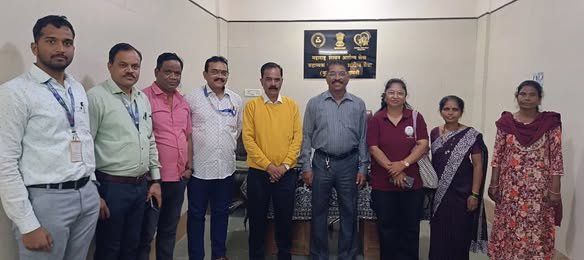
Association of People Affected by Leprosy (APAL) held a meeting with the District Leprosy Officer at the District Leprosy Office, Krishna District
On 29th December 2025, the Association of People Affected by Leprosy (APAL) met with the District Leprosy Officer at the District Leprosy Office, Krishna district, to review the current status of leprosy in the district. During the visit, APAL representatives discussed the prevalence of leprosy, early case detection, treatment follow-up, and challenges faced by persons affected by leprosy in accessing timely services. The District Leprosy Officer shared updates on ongoing interventions and the overall performance of the district under the National Leprosy Eradication Programme.
The discussion also focused on the functioning of the Leprosy Case Detection Campaign (LCDC) programme and the need to strengthen active case finding, community awareness, and stigma reduction. APAL highlighted the living conditions and social protection issues of leprosy colonies in the district and emphasized the importance of special schemes for colony residents, including health care support, disability certification, pensions, and livelihood assistance. The meeting concluded with a shared commitment to improve coordination between the health department and APAL to ensure comprehensive care, dignity, and social inclusion for persons affected by leprosy in Krishna district.
APAL’s State Committee in Telangana, in collaboration with local donors, visited the Pasumamula Santhoshnagar Leprosy Colony
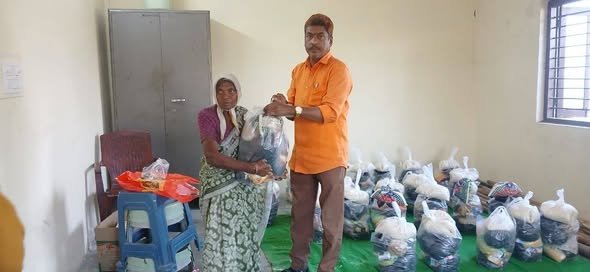
APAL’s State Committee in Telangana, in collaboration with local donors, visited the Pasumamula Santhoshnagar Leprosy Colony.
During the visit, issues faced by people affected by leprosy were discussed in the presence of Mr. Ramesh, SLAP-TS President and APAL State Coordinator. The interaction focused on understanding their day-to-day challenges and the need for continued support and dignity for the affected families.
As part of this initiative, daily essential groceries were distributed to 25 leprosy-affected families with the support of local donors. Colony leaders Pullaiah, Pentaiah, Yandi Aziz, Ramulu, and Yellaiah, along with the colony residents, expressed their heartfelt gratitude to APAL, the State Committee, and the local donors for their compassionate support and concern for the community.
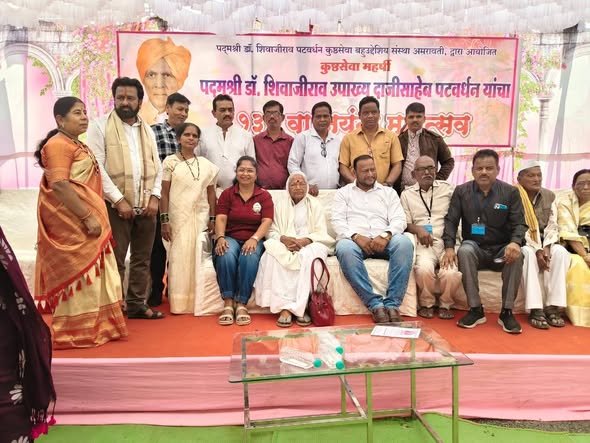
APAL members participated in the program and paid respectful tributes to Padma Shri Dr. Shivajirao Patwardhan ji.
APAL members participated in the program and paid respectful tributes to Padma Shri Dr. Shivajirao Patwardhan ji. He was not only a skilled physician but also a compassionate social worker, mentor, and a great source of inspiration. His thoughts, work ethic, and humane approach continue to guide and inspire us even today. On this solemn occasion, we reaffirm our pledge to imbibe his ideals and continue our journey on the path of social service with dedication and commitment.
In 1946, the Jagdamba Leprosy Home Institution was established, and Vinoba Bhave laid its foundation stone on the auspicious occasion of Janmashtami. On the same day, Sant Gadgebaba devoted the entire day to shramdaan (voluntary service) on the institution’s premises and delivered a discourse in the evening.
With deep concern for the future of children of persons affected by leprosy, Dr. Patwardhan visited leprosy colonies across the country. He encouraged patients to seek treatment at the institution and emphasized education for their children. This vision led to the establishment of the Mahamana Malviya School in 1962. To date, more than 25,000 children have completed their education up to the 10th standard, most of them from leprosy-affected families, orphaned backgrounds, and tribal communities.
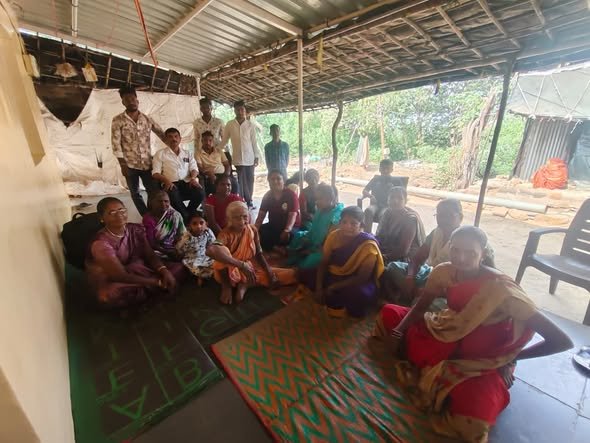
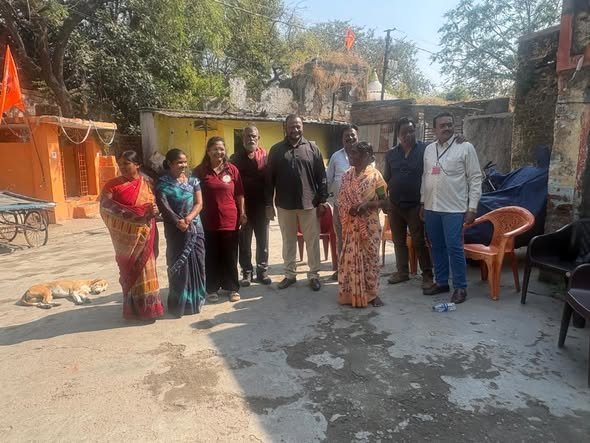
APAL President Ms. Maya Ranavare, along with the APAL’s state committee and the Maharashtra Leprosy Association team, visited four leprosy colonies in Amravati district.
On 27 December 2025, APAL President Ms. Maya Ranavare, along with the APAL’s state committee and the Maharashtra Leprosy Association team, visited four leprosy colonies in Amravati district.
The colonies visited were
1. Garib Nagar
2. Venkayapura
3. New Pandurang Wadi
4. Pandurang Wadi
During the visit, the teams interacted closely with the residents and community leaders to understand their living conditions and ongoing challenges.
Detailed discussions were held with the colony members on key issues such as access to healthcare, social security benefits, housing, livelihoods, and persistent stigma and discrimination. The teams assured the residents that their concerns would be taken forward for advocacy with the concerned authorities and stakeholders, and reaffirmed their commitment to work collectively for the dignity, rights, and improved quality of life of persons affected by leprosy and their families.
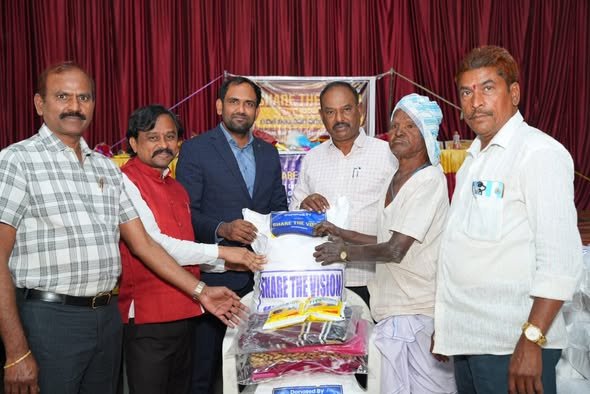
The Association of People Affected by Leprosy (APAL), with the support of Share the Vision, distributed essential commodities to 650 leprosy-affected families at Pedda Amberpet.
APAL and Share the Vision Distribute Essential Commodities to 650 Leprosy-Affected Families at Pedda Amberpet
The Association of People Affected by Leprosy (APAL), with the support of Share the Vision, distributed essential commodities to 650 leprosy-affected families at Pedda Amberpet. The program was organized under the leadership of Mr. Maniyada Ramesh, State President of SLAP and State Coordinator of APAL, at Kallem Bal Reddy Function Hall.
Essential items, including rice, pulses, cooking oil, sweaters, blankets, sarees, and grocery materials were distributed to the beneficiaries.
The event was attended by Mr. Muthineni Veerayya, Chairman, Department of Welfare of Persons with Disabilities; Dr. D. John Babu, Joint Director, Public Health and Family Welfare Department (Leprosy Division); and Mr. Ravinder Reddy, Deputy Commissioner, Pedda Amberpet Circle, as chief guests.
Speaking on the occasion, Mr. Narayana, Director of Share the Vision, said the organization is committed to supporting leprosy-affected and economically vulnerable families whenever needed. The chief guests appreciated Share the Vision’s large-scale humanitarian effort and encouraged others to support marginalized communities.
Beneficiary families expressed gratitude for the timely assistance, stating that the support provided much-needed relief amid rising living costs.
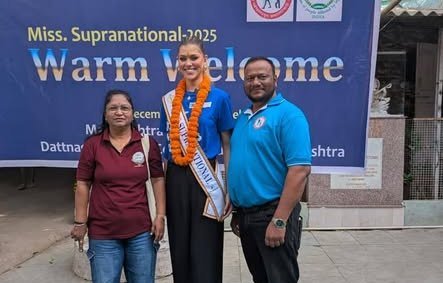
Association of Persons Affected by Leprosy (APAL) and Maharashtra Kusht Sanghatana collaboratively organized a meeting with the support of the Sasakawa Health Foundation.
On 21st December 2025, the Association of Persons Affected by Leprosy (APAL) and Maharashtra Kusht Sanghatana collaboratively organized a meeting with the support of the Sasakawa Health Foundation. The meeting was made special by the warm welcome extended to Miss Supranational 2025, Ms. Harasnjat Nisha Murillo, who visited Datta Nagar Leprosy Colony in Mumbai, Maharashtra. Her presence brought encouragement and visibility to the ongoing efforts for the dignity and rights of persons affected by leprosy.
During her visit, Ms. Harasnjat Nisha Murillo interacted closely with the leaders of the organizations as well as the residents and families living in the colony. She took time to listen to their experiences and carefully observed the living conditions of persons affected by leprosy, gaining a deeper understanding of their daily challenges, resilience, and community life.
Expressing her concern and solidarity, Ms. Murillo stated that she is committed to contributing to the elimination of stigma and discrimination associated with leprosy. She emphasized the urgent need for awareness and education about the disease, highlighting that leprosy is curable and that discrimination arises mainly due to lack of knowledge. Her message strongly reinforced the collective mission of APAL and Maharashtra Kusht Sanghatana to promote inclusion, dignity, and equal rights for persons affected by leprosy and their families.
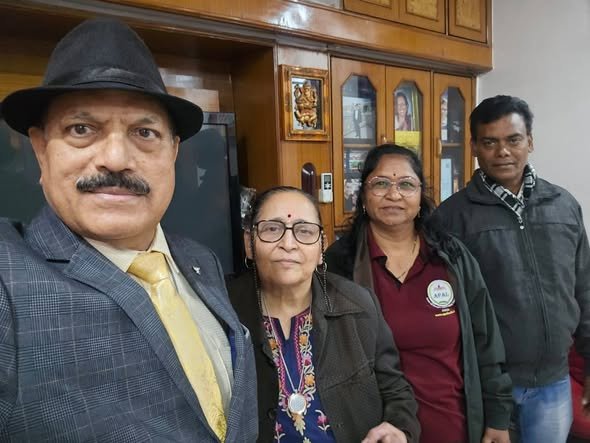
APAL, along with APAL’s State Committee – Delhi, held an important meeting in Delhi with Dr. K. S. Baghotia, M.D.
APAL, along with APAL’s State Committee – Delhi, held an important meeting in Delhi with Dr. K. S. Baghotia, M.D., on 20th December 2025. Dr. Baghotia is a senior medical professional associated with Indira Gandhi Hospital also serves as the Honourable Secretary of Hind Kusht Nivaran Sangh / Indian Leprosy Association.
The meeting was a significant step towards strengthening collaboration between APAL and national-level institutions working in the field of leprosy.
During the meeting, APAL and the Delhi State Committee shared their work, experiences, and challenges faced by persons affected by leprosy and their families, particularly in urban settings like Delhi. Discussions focused on issues such as stigma and discrimination, access to timely diagnosis and treatment, rehabilitation, livelihood opportunities, and social inclusion. Dr. K. S. Baghotia provided valuable insights from a medical and policy perspective and appreciated the role of APAL as a people-led organization working at the grassroots level.
The meeting emphasized the need for strong coordination between people’s organizations, medical institutions, and national bodies to ensure comprehensive support for persons affected by leprosy. Future strategies, joint activities, and advocacy efforts were discussed to strengthen services, awareness programmes, and policy engagement. APAL and its State Committee expressed their commitment to continued collaboration with Dr. K. S. Baghotia and the Indian Leprosy Association to collectively work towards dignity, rights, and empowerment of persons affected by leprosy and their families.
APAL’s State Committee – Delhi and the Youth Committee Meeting was successfully held in Delhi.
On 18th December 2025, a joint meeting of APAL, APAL’s State Committee – Delhi, and the Youth Committee Meeting was successfully held in Delhi. The meeting brought together state leaders, youth representatives, and members of APAL to review the current situation of persons affected by leprosy and to collectively plan future actions. The gathering reflected strong unity and commitment towards advancing the rights, dignity, and socio-economic development of persons affected by leprosy and their families.
During the meeting, detailed discussions were held on future activities and strategic planning to strengthen community-based support systems. Key focus areas included capacity building of state and youth leaders, awareness generation to reduce stigma and discrimination, access to social welfare schemes, livelihood opportunities, and ensuring active participation of persons affected by leprosy in decision-making processes. The Youth Committee shared ideas on engaging young leaders in advocacy, community mobilization, and outreach programmes to create long-term sustainable impact.
The meeting concluded with a shared resolve to work in close coordination between APAL, the State Committee, and the Youth Committee. Clear strategies were outlined to strengthen organizational structures, improve communication, and enhance collective action at state and community levels. APAL reaffirmed its commitment to empowering persons affected by leprosy and their families, ensuring their voices are heard, their rights are protected, and their lives are improved through united and strategic efforts.
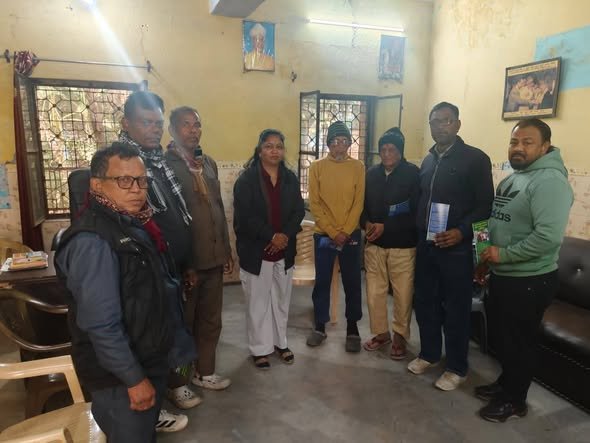
APAL’s State Committee in Madhya Pradesh conducted an important meeting in Ujjain to address the ongoing issues faced by persons affected by leprosy
On 8th December 2025, APAL’s State Committee in Madhya Pradesh conducted an important meeting in Ujjain to address the ongoing issues faced by persons affected by leprosy. The meeting was held at the Leprosy Ashram in Ambukhedi, Ujjain, where both committee members and colony residents actively participated.
During the meeting, members of the State Committee, Sarang Gayadhane, engaged in meaningful discussions with the residents to understand their challenges in depth. The primary purpose of the gathering was to identify practical solutions and work collectively towards resolving the problems in the colony. The committee reaffirmed its commitment to improving the living conditions, welfare, and dignity of the people affected by leprosy residing in Ambukhedi.
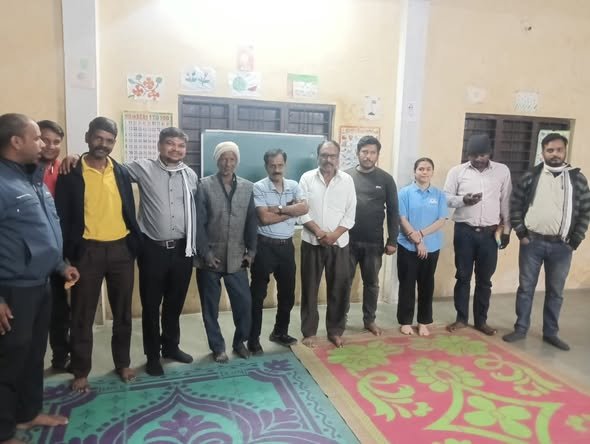
APAL, along with the APAL State Committee in Maharashtra, visited the Malangad Leprosy Colony in Kalyan, Mumbai, and interacted with the residents
On 7th December 2025, APAL, along with the APAL State Committee in Maharashtra, visited the Malangad Leprosy Colony in Kalyan, Mumbai, and interacted with the residents. During the visit, the team spent time understanding the living conditions of persons affected by leprosy and their families, listening to their concerns and challenges firsthand. The interaction created a space for open discussion and helped APAL gain a deeper understanding of the immediate needs of the community.
During the visit, several critical issues were identified. The first major concern was the condition of the houses in the colony. Many of the houses are severely damaged and unsafe, requiring urgent repair or reconstruction. The residents expressed their worries about living in such vulnerable structures, especially during harsh weather. APAL’s team assured them that efforts would be made to prepare and implement a suitable plan to address the housing problem.
The second issue raised was the serious water shortage faced by the colony. Since the colony is located deep within a forested area, access to regular and safe water supply has been a long-standing challenge. Residents highlighted the difficulties they face daily due to inadequate water facilities. APAL and the State Committee discussed possible solutions and committed to taking the matter forward with concerned authorities and partner organizations.
Another important topic of discussion was the issue of education for the children living in the colony. Due to the remote location and lack of basic facilities, children struggle to access quality education. APAL emphasized the need to connect the children with better educational opportunities and assured the residents that the committee would explore ways to support their schooling, including liaising with government and private institutions.
Overall, the visit served as an important step in understanding the hardships of the Malangad Leprosy Colony and reaffirmed APAL’s commitment to working towards sustainable solutions that uphold the dignity, rights, and welfare of persons affected by leprosy.