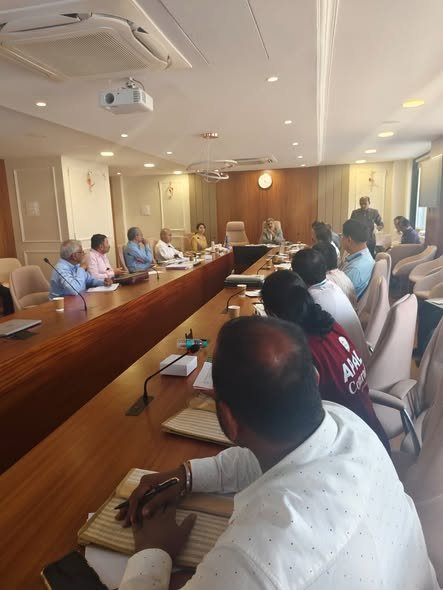
APAL’s President, Ms. Maya Ranavare, along with representatives from the Maharashtra Kusht Pidit Sanghatana and team, met on 13th November 2025 with Dr. Nipun Vinayak, Secretary, Government of Maharashtra (Policy), Health Department. Dr. Vinayak attended the meeting as the Chief Guest. During this meeting, the APAL delegation formally submitted a detailed report outlining major concerns regarding the current leprosy notification process in the state.
In the discussion, APAL highlighted that the referral system—under which private doctors are expected to send suspected leprosy patients to government hospitals—remains unclear and poorly communicated. This lack of clarity has resulted in confusion at the field level, with many patients turning to private treatment without informing authorities. As a result, numerous cases remain unreported, leading to gaps in official government records.
The delegation also pointed out that there are no clear guidelines on whether private medical practitioners are permitted to prescribe or dispense leprosy medications. This ambiguity creates significant challenges for both doctors and patients. Moreover, government hospitals are currently following inconsistent reporting practices, as there is no standardized operating procedure (SOP) or uniform format available for documenting and notifying leprosy cases.
Another major issue raised was the inadequate communication of patient rights. Many individuals affected by leprosy are not properly informed about their entitlements, and certain government directives are vague, leading to practical difficulties for health workers, frontline staff, and organizations working closely with affected communities.
APAL urged the government to address these issues by issuing clear and comprehensive guidelines, developing a unified and transparent notification system, and establishing standard SOPs and reporting formats. The organization emphasized the need for a patient-centered approach that ensures dignity, proper communication, and effective implementation at all levels.
The meeting concluded with a positive response from Dr. Vinayak, who acknowledged the concerns and assured that the Health Department would review the matter and take necessary steps to improve the existing system.