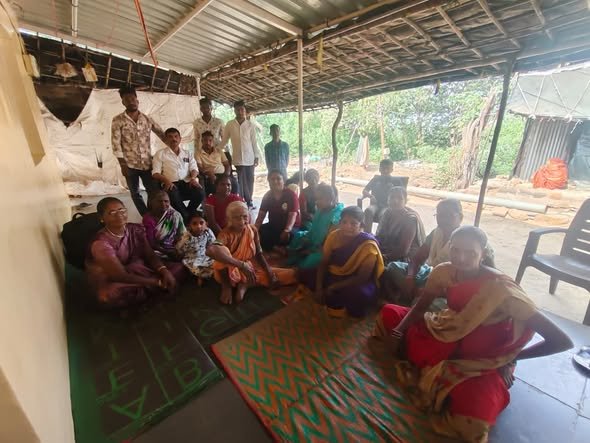
On 7th December 2025, APAL, along with the APAL State Committee in Maharashtra, visited the Malangad Leprosy Colony in Kalyan, Mumbai, and interacted with the residents. During the visit, the team spent time understanding the living conditions of persons affected by leprosy and their families, listening to their concerns and challenges firsthand. The interaction created a space for open discussion and helped APAL gain a deeper understanding of the immediate needs of the community.
During the visit, several critical issues were identified. The first major concern was the condition of the houses in the colony. Many of the houses are severely damaged and unsafe, requiring urgent repair or reconstruction. The residents expressed their worries about living in such vulnerable structures, especially during harsh weather. APAL’s team assured them that efforts would be made to prepare and implement a suitable plan to address the housing problem.
The second issue raised was the serious water shortage faced by the colony. Since the colony is located deep within a forested area, access to regular and safe water supply has been a long-standing challenge. Residents highlighted the difficulties they face daily due to inadequate water facilities. APAL and the State Committee discussed possible solutions and committed to taking the matter forward with concerned authorities and partner organizations.
Another important topic of discussion was the issue of education for the children living in the colony. Due to the remote location and lack of basic facilities, children struggle to access quality education. APAL emphasized the need to connect the children with better educational opportunities and assured the residents that the committee would explore ways to support their schooling, including liaising with government and private institutions.
Overall, the visit served as an important step in understanding the hardships of the Malangad Leprosy Colony and reaffirmed APAL’s commitment to working towards sustainable solutions that uphold the dignity, rights, and welfare of persons affected by leprosy.