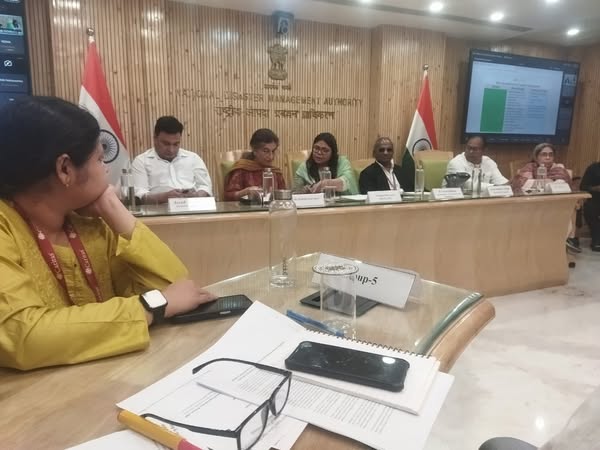
Participation of APAL in NDMA Meeting on Support for Persons with Disabilities in Disasters
4th & 5th June 2025, New Delhi
On the 4th and 5th of June 2025, the National Disaster Management Authority (NDMA) convened a pivotal meeting in New Delhi aimed at strengthening government support for persons with disabilities during disasters. The Association of People Affected by Leprosy (APAL) was represented at this important forum by Mr. Vijay Kumar, Delhi State Coordinator of APAL, who was specially invited to contribute the perspective of persons affected by leprosy.
During the proceedings, Mr. Vijay Kumar was allotted five minutes to present his views from the stage. He used this opportunity to bring national attention to the challenges faced by a large number of persons with disabilities residing in leprosy colonies (Kusth Ashrams) across India. He emphasized a critical gap in the Government of India’s disaster preparedness: the absence of a comprehensive database of persons with disabilities living in these colonies, despite multiple surveys having been conducted in the past.
Mr. Kumar also highlighted the lack of dedicated shelter homes within leprosy colonies, leaving residents particularly vulnerable during natural disasters. He advocated for the development of a national policy, led jointly by the NDMA and the Ministry of Health and Family Welfare, to systematically address the specific needs of persons with leprosy-related disabilities in disaster contexts.
Key Recommendations Presented:
Provision of ulcer dressing services and the supply of essential medical materials to all persons with leprosy-related disabilities.
Appointment of trained medical dressers in every leprosy colony to ensure regular care and support.
Construction of disaster-resilient shelter homes within all leprosy ashrams to provide safe refuge in times of emergency.
In addition to physical vulnerabilities, Mr. Kumar spoke about the social stigma and economic hardships experienced by many leprosy-affected individuals. He pointed out that family rejection and societal discrimination often force these individuals to live in extreme poverty, sometimes on the streets, without access to basic services or protection during disasters.
He issued a strong appeal to the Government of India to prioritise this highly marginalised group in all future disaster management and welfare programs. In his closing remarks, Mr. Kumar stated:
“Leprosy-affected persons with disabilities continue to be marginalised. I request the Government of India to ensure that they receive proper support and opportunities to live independent lives with dignity and equality in society.”
Conclusion
APAL’s participation in the NDMA meeting was a significant step in ensuring that the voice of leprosy-affected persons with disabilities is included in national disaster management strategies. The recommendations presented by Mr. Vijay Kumar were well-received by NDMA officials and other stakeholders. APAL will continue its advocacy efforts to ensure these crucial issues are addressed in upcoming policies and programs.